research
Research in spatial audio, room acoustics, and immersive systems.
My work connects physical acoustics, real-time systems, and human perception. The projects below span acoustic capture, modeling, rendering, and evaluation.
Real-time virtual acoustics for AAR
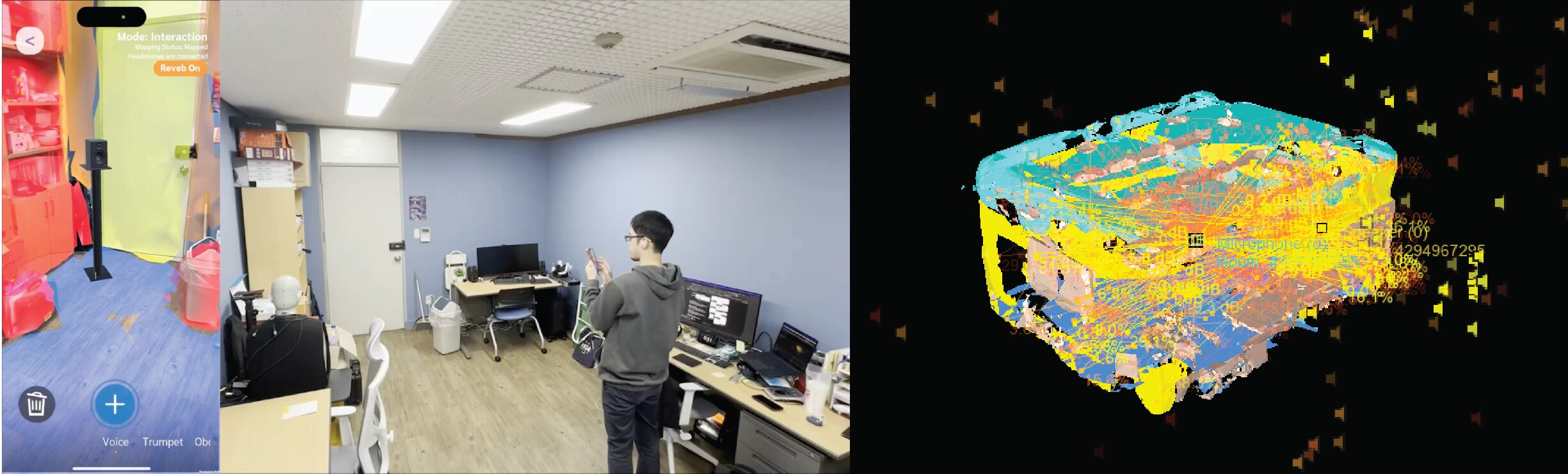
A room-aware rendering framework that makes mobile virtual sound adapt to the listener's immediate physical surroundings. The system combines object-based game audio, real-time 3D environment analysis, and dynamic room-acoustic modeling under the latency and compute constraints of mobile auditory augmented reality.
Selected output: “An approach to real-time late reverberation generation for six-degrees-of-freedom Auditory Augmented Reality,” 189th Meeting of the Acoustical Society of America, 2025. Invited talk.
Explorable soundscapes for cultural memory
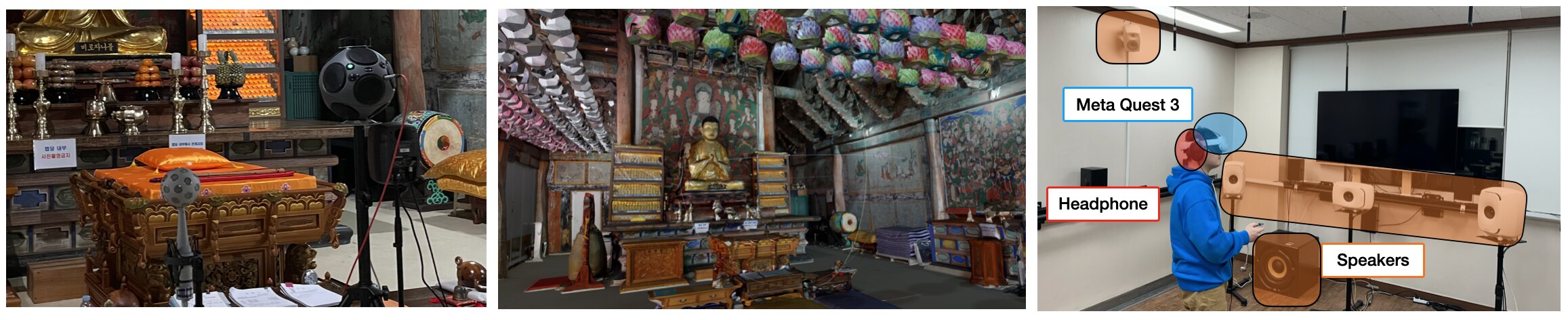
I developed an end-to-end workflow from on-site high-order ambisonic capture to post-processing and real-time rendering in VR. The resulting 6DoF environments allow listeners to move through reconstructed heritage spaces with spatial realism and presence.
Selected output: “Virtual Reconstruction of Historical Heritage: A 6DoF Immersive Audio-Visual Reproduction of Magoksa Temple,” IEEE I3DA, 2025.
What makes binaural audio feel right?
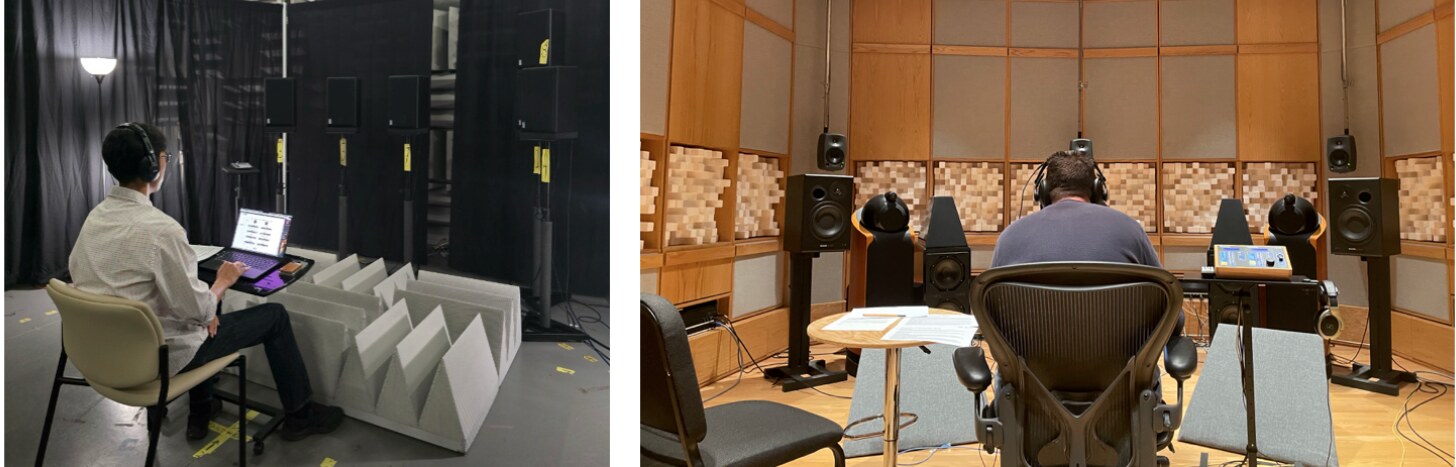
Through controlled listening tests and statistical analysis, I study how spatial accuracy, timbre, and externalization shape preference for head-tracked binaural renderers. The work provides creators and developers with an evidence-based framework for balancing competing acoustic attributes.
Latest article: “Regional differences in listener preferences for head-tracked binaural audio,” npj Acoustics, 2, 23, 2026.
Adaptive sound fields for next-generation vehicles
A joint research project with Hyundai Motor Company exploring context-aware acoustic control for Purpose-Built Vehicles. As project leader, I designed a Max/MSP-based real-time processing framework and multichannel array for active reverberation with acoustic-feedback mitigation.